ClimateCare has partnered with Well Built Consulting to help us run a better company: better HVAC service, better plumbing service. That’s the short version. Here’s what it actually means for you as a customer.
Well Built Consulting & ClimateCare Services
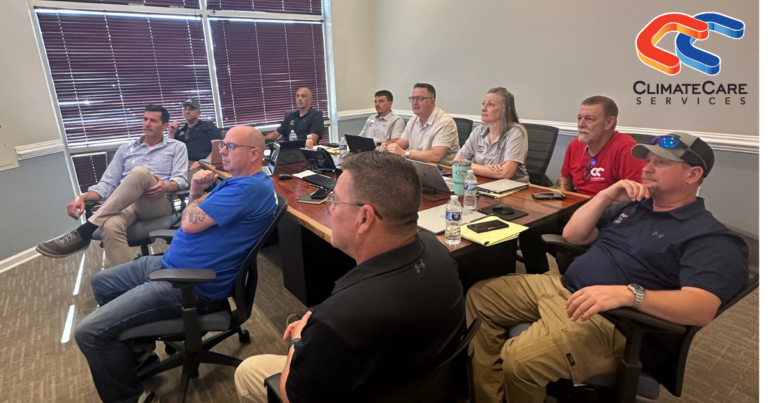
Well Built Consulting works with our leadership team to help us plan and communicate better, and hold ourselves accountable. They help us set clear goals, define who’s responsible for what, and track whether we’re actually meeting the standards we set for ourselves.
Neil Carlson, Group Director at Well Built Consulting, put it this way:
“Well Built Consulting partners with ClimateCare as a Fractional Chief Strategy Officer and strategic execution resource. Their work helps our team clarify vision, align leadership, strengthen operating systems, develop leaders, improve role clarity and KPIs, and turn strategic priorities into accountable action. Together, ClimateCare and Well Built are focused on sustainable growth, operational excellence, and delivering a dependable customer experience.”
Steve Smollon, President of ClimateCare, added:
“As ClimateCare continued to grow, I recognized that we needed additional strategic guidance to ensure our leadership structure, operating systems, and long-term planning kept pace with the growth of the company. That is why I brought in Well Built Consulting as our Fractional Chief Strategy Officer.
Over the past year, Neil Carlson, with support from Loren Kessler, has helped us establish a clearer organizational structure, better define leadership roles and responsibilities, strengthen our meeting and accountability systems, develop meaningful KPIs, and turn our long-term vision into an actionable strategic plan. They have also helped us identify and develop future leaders while preparing ClimateCare for sustainable growth into new markets and service divisions.
Neil and Loren have become trusted members of our leadership team. Their guidance has helped us make better-informed decisions, improve accountability, and build a stronger foundation for ClimateCare’s future.“
Why This Matters to You
None of this stays behind the scenes. When our team has clearer goals and better systems, it shows up in the actual service you get. The ClimateCaer technicians show up on time. Jobs are done right the first time. Communication is clearer from your first call to the final walkthrough. Our partnership with Well Built Consulting is one reason we can keep calling ourselves the best HVAC and plumbing service provider in the areas we cover.
What’s Next?
We’re also building something called ClimateCare Academy. It’s a training program for our team, focused on making sure every technician who walks into your home or business has the skills and knowledge to do the job right. More details are coming soon, but the goal is simple: better trained technicians, better service for you.
Service Benefits You Get Right Now
While we keep improving behind the scenes, here’s what you already get with every ClimateCare installation:
- 10-year warranty on qualifying installations. A new HVAC system is a real investment, and you shouldn’t have to worry about what happens if something goes wrong down the line. Qualifying installations come with a 10-year warranty, so you’re covered well past the first year or two when most problems tend to show up.
- Free maintenance visit included with your install. Every installation comes with one maintenance visit at no extra cost. We recommend scheduling it 3 to 6 months after your system goes in, once it’s had some time to run under normal conditions. That gives our technicians a chance to check that everything is performing as it should and catch small issues before they become bigger problems.
- Additional maintenance agreements are available for purchase. If you want ongoing coverage beyond that first free visit, we offer maintenance agreements you can add on. With regular maintenance, you take a proactive stance to keep your system running efficiently and avoid surprise repair bills, and an agreement in place means you don’t have to remember to schedule it yourself.
- A full homeowner orientation with every project. Before our team leaves your home, we walk you through your new system. That means understanding how to use your thermostat, what regular upkeep looks like, and what to watch for if something seems off. You shouldn’t have to guess how your system works, so we make sure you have the knowledge to use it confidently from day one.
Questions About Your HVAC or Plumbing Service?
If you’re looking for reliable HVAC service or plumbing service in Maryland or Delaware, our team is ready to help, backed by a company that’s always working to do things better.
Call (410) 921-3838 or schedule a free estimate to get started.